



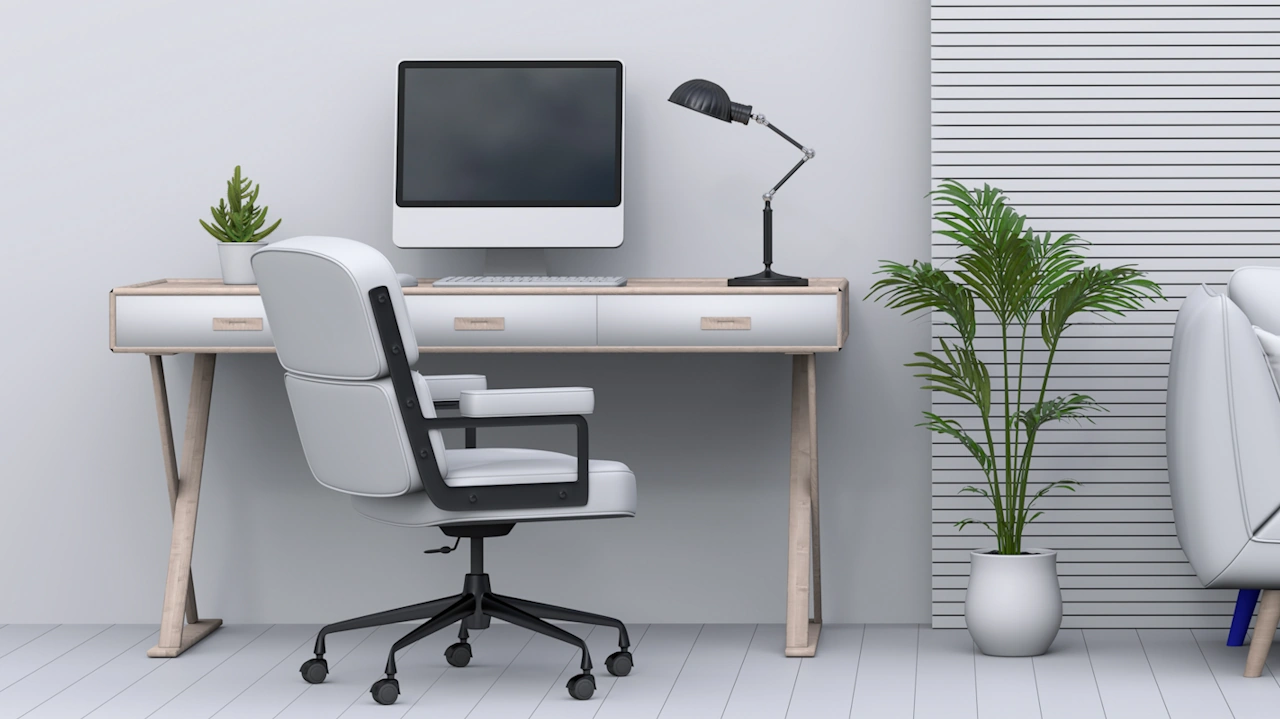
This guide helps you choose a desk that feels supportive, spacious, and aligned with the way you work
Your desk is the foundation of your workspace.
It shapes your posture, your workflow, and even how calm or overwhelmed you feel during the day. The right desk supports your body, your tasks, and your environment — helping you work with more ease and intention.
1. Choose the Right Desk Size
The size of your desk affects everything from posture to productivity.
Width
- 120–160 cm works for most people
- 160–180 cm if you use dual monitors or need more space
- 100–120 cm for compact or shared spaces
Depth
- 70–80 cm is ideal
- Anything under 60 cm can feel cramped
- Deeper desks help with monitor distance and cable management
A desk that’s too small creates clutter and tension.
A desk that’s too large can overwhelm the room.
Aim for a size that supports your tools without crowding your space.
2. Consider Sit‑Stand Options
Sit‑stand desks support movement throughout the day, helping reduce stiffness and fatigue.
Benefits
- Encourages healthy posture changes
- Reduces prolonged sitting
- Supports focus during long tasks
- Helps with back and shoulder comfort
What to look for
- Smooth, quiet height adjustment
- Stable frame (no wobble at standing height)
- Memory presets
- A surface that feels calm and durable
If a full sit‑stand desk isn’t right for your space, a desk riser can offer similar benefits
3. Prioritise Stability and Build Quality
A stable desk helps you feel grounded and supported.
Look for:
- Solid legs or a strong frame
- Minimal wobble when typing
- A surface that doesn’t flex
- Quality materials (wood, MDF, metal)
A stable desk creates a sense of trust — your tools feel secure, and your workspace feels dependable.
4. Choose a Surface That Supports Calm
Your desk surface affects both the look and feel of your workspace.
Consider:
- Matte finishes to reduce glare
- Warm wood tones for a grounded, natural feel
- Neutral colours to reduce visual noise
- Rounded edges for comfort and softness
Your desk should feel like a calm foundation, not a distraction.
5. Check Leg Design and Knee Clearance
Comfort isn’t just about the top of the desk — it’s also about the space underneath.
Look for:
- Enough room for your legs to move freely
- No bulky drawers blocking your knees
- Central beams that don’t interfere with posture
- Space for footrests or under‑desk storage
A desk that feels open underneath supports relaxed, natural posture.
6. Think About Cable Management
A good desk makes it easy to keep cables tidy.
Helpful features:
- Built‑in cable trays
- Grommet holes
- Under‑desk channels
- Space for a power strip
Cable management reduces visual clutter and helps your workspace feel calm and intentional.
Summary
Choosing the right desk is about more than furniture — it’s about creating a workspace that supports your body, your focus, and your wellbeing.
A well‑chosen desk becomes a stable, calming foundation for your workday.