



Clarity & Focus
Strategies that help you cut through distraction, regain mental sharpness, and work with purpose.
Clarity isn’t about forcing your mind to stay sharp or trying to control every distraction.
It’s about creating the conditions that help your attention settle, your thoughts organise, and your work feel purposeful again.
Small shifts in how you shape your environment, manage your inputs, and move through your tasks can clear mental fog, reduce cognitive load, and bring your focus gently back into view.
What Clarity Really Means At Your Desk
Focus isn’t a single burst — it’s a rhythm.
Your mind naturally cycles through attention, effort, and reset.
When your workspace supports those cycles, you experience:

- fewer moments of mental drift or distraction
- smoother transitions between tasks
- more ease in your thinking and decision‑making
- clearer focus and steadier energy
When clarity becomes part of your workspace rhythm, your attention feels supported and your purpose sharpens naturally. It’s less about forcing concentration — and more about shaping an environment that helps your mind work with you.
Common Distraction Patterns (What People Actually Feel)
Focus isn’t about staying perfectly attentive.
It’s about feeling supported enough that your mind doesn’t have to work harder than it needs to.
Most people experience the same handful of distraction patterns:

- attention jumping between tasks or tabs
- thoughts looping or replaying unfinished work
- difficulty filtering noise or interruptions
- losing track of priorities or next steps
- eyes scanning without absorbing information
- energy dipping or scattering mid‑task
Your mind isn’t doing anything wrong — it’s simply showing you what needs clarity and support.
Small Shifts That Make A Big Difference
Here are gentle adjustments that help your focus settle naturally:

Clear Your Visual Field
Remove visual noise — tidy your workspace or close unused tabs. A clearer view helps your mind breathe.
Bring Your Attention Closer
If your thoughts keep drifting, narrow your focus to one small, defined task.
If you’re over‑focused, step back to regain perspective.
Let Your Mind Soften
Notice when your thinking feels tight or effortful. A short pause or slow breath can reset your clarity.
Keep Your Energy Grounded
Focus comes from rhythm — small shifts that keep your attention responsive and at ease.
Brief movement or a change in posture helps your mind stay alert without strain.
Reset Often
Step away for a moment — look out a window, stretch, or breathe.
Each reset gives your focus a stable base.
How Your Setup Shapes Your Focus
Your workspace influences how your mind feels more than you might expect:

- Visual clarity affects mental ease
- Sound environment affects concentration
- Lighting affects alertness and cognitive rhythm
- Screen arrangement affects attention flow
- Screen arrangement affects attention flow
When these elements work together, your focus feels quietly supported — not forced.
Each part of your setup begins to work in harmony: your lighting encourages calm alertness, your screen meets your gaze without strain, and your space allows your thoughts to rest and re‑engage naturally.
The result isn’t just sharper focus — it’s a quiet mental balance, where clarity feels held rather than managed, and purpose becomes something you notice only because everything feels right.
Early Signs Your Mind Needs A Reset
You may notice:

- attention drifting or jumping between tasks
- rereading the same line without absorbing it
- thoughts looping or replaying unfinished work
- difficulty prioritising or deciding what to do next
- energy feeling scattered or dull
These are gentle cues that your mind is asking for clarity and space.
Responding early helps focus stay effortless and prevents mental strain from building up.
When To Explore More Support
If you’re noticing recurring distraction or mental fatigue, it may help to explore:

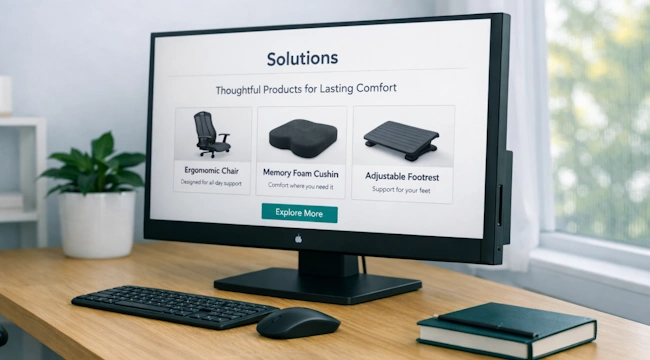


Explore comfort your way – through gentle guidance and supportive tools.
A calm space to explore what helps your body feel supported.

Explore More Insights
Read gentle insights and reflections to help you feel more at ease in your workspace.

Related Guides
Discover supportive guidance to help your body and workspace feel balanced.

Supportive Solutions
Find ergonomic tools and thoughtful designs that bring comfort into your daily flow.