


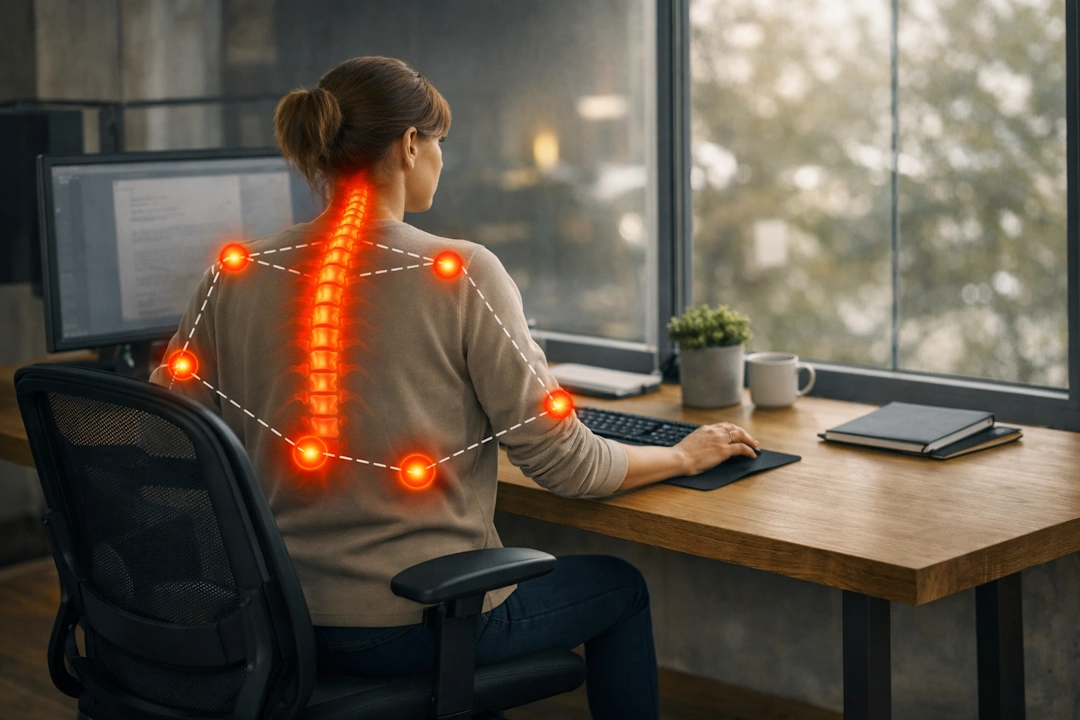
The Hidden Load on Your Body During the Workday
A gentle look at the small tensions your body carries through the day — and how simple shifts can ease the load.
Your body is always working — even when you feel still
Stillness isn’t neutral.
When you sit or stand for long periods, your body holds you in place using:
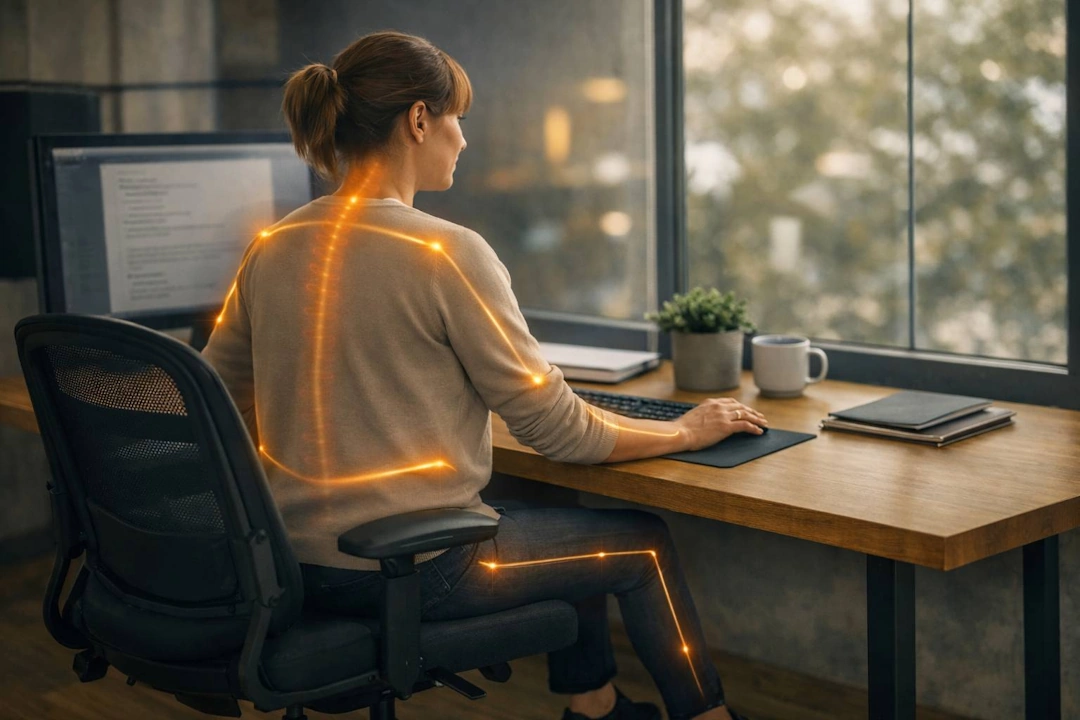
- micro‑contractions in the neck and shoulders
- stabilising muscles around the spine
- subtle tension in the hips and legs
- small gripping patterns in the hands and forearms
These are tiny loads — but they’re constant.
And constant load is what creates fatigue.
Micro‑tension builds slowly, then suddenly feels like “tightness”
Many people don’t realise this is one of the most common causes of neck tightness at the desk.
Throughout the day, your body collects small stresses:

- leaning slightly forward
- holding your shoulders a little higher
- reaching a few centimetres too far
- sitting with more weight on one side
- bracing your core without realising
None of these feel dramatic in the moment.
But together, they create a background strain that grows hour by hour.
This is the hidden load.
Your spine carries more weight than you think
When your head moves even a few centimetres forward, the load on your spine increases significantly.
Your body compensates by tightening:
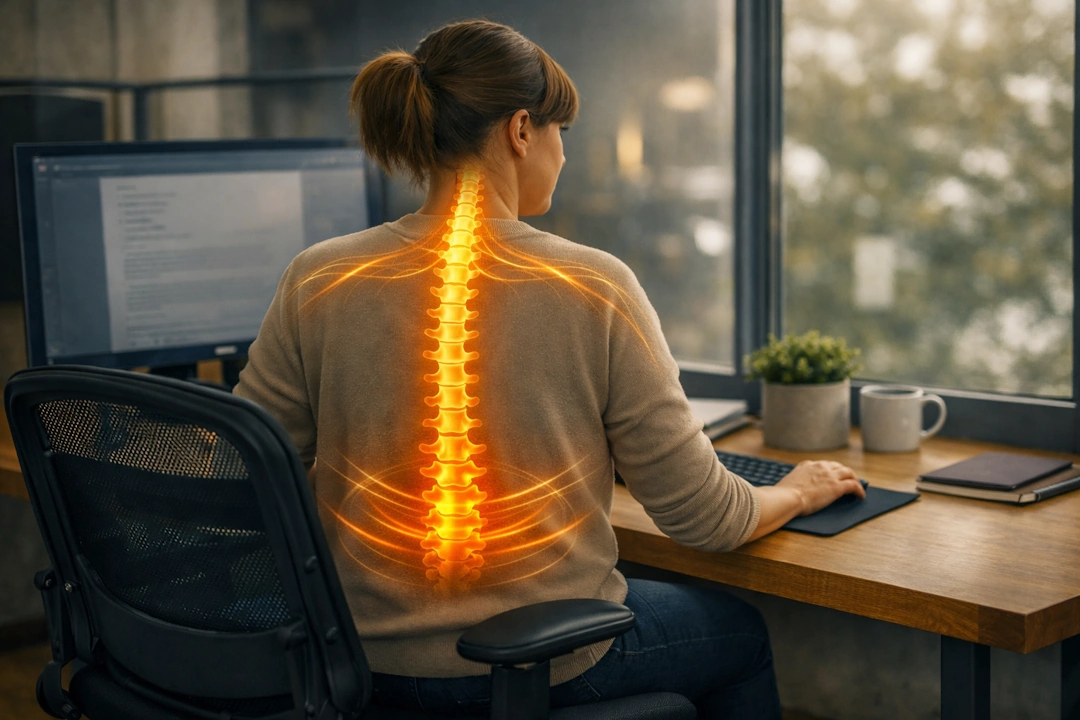
- the upper back
- the neck
- the shoulders
- the lower back
This isn’t “bad posture” — it’s your body doing its best to support you.
But over time, the effort adds up.
This explains why lower‑back pressure from sitting builds even when you feel still
Small adjustments reduce the load immediately
You don’t need big changes to reduce the hidden load.
Tiny shifts make a noticeable difference:

- bringing the screen slightly closer
- lowering your shoulders
- softening your grip on the mouse
- placing both feet flat
- leaning back into your chair
- letting your elbows rest
These micro‑adjustments release tension your body has been holding without you realising.
These tiny posture shifts are proven to reduce workday tension and discomfort.
Awareness is the first step to long‑term comfort
Once you understand the hidden load, you start noticing:
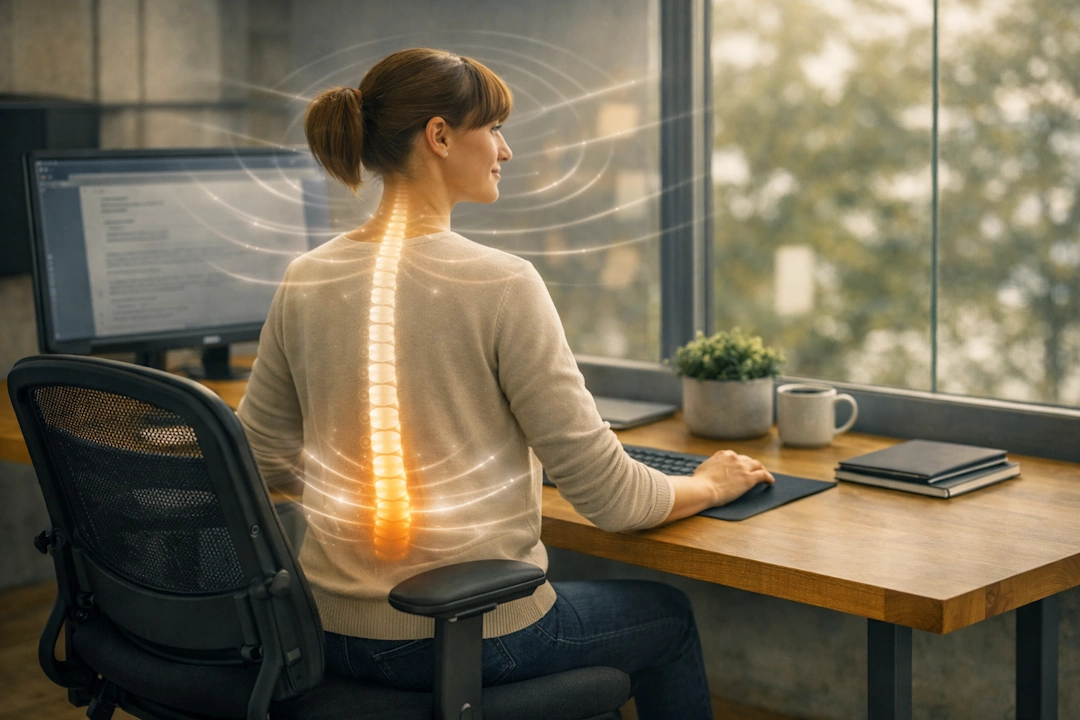
- when your shoulders rise
- when your head drifts forward
- when your back stops being supported
- when your hands grip too tightly
- when your breathing becomes shallow
This awareness helps you make small, natural corrections throughout the day — the kind that protect your body without interrupting your work.
What this Insight helps you do
- recognise the early signs of tension
- understand why small adjustments matter
- reduce strain before it becomes discomfort
- support your body with less effort
- build a more comfortable, sustainable workday
FAQ’S (Frequently Asked Questions)
People often ask:
The hidden load is the quiet effort your body makes to hold you in place throughout the day — the small tensions, stabilising muscles, and subtle holding patterns that build up even when you feel still. It’s not dramatic or painful; it’s simply the background work your body does to support you.
Because the load builds gradually. Your body adapts moment by moment, making tiny adjustments to keep you comfortable and focused. It’s only later — when you pause, move, or finish work — that you feel the accumulated effort.
Not in itself. The body is designed to adapt and support you. The challenge comes when the same small tensions repeat for long periods without release. Understanding the hidden load simply helps you recognise early signs of strain so you can support your body more naturally throughout the day.


Explore comfort your way – through gentle guidance and supportive tools.
A calm space to explore what helps your body feel supported.

Explore More Insights
Read gentle insights and reflections to help you feel more at ease in your workspace.

Related Guides
Discover supportive guidance to help your body and workspace feel balanced.
Supportive Solutions
Find ergonomic tools and thoughtful designs that bring comfort into your daily flow.