



Quick Tips…
Are You Shifting Your Posture Regularly?
Quick Adjustments to Check Your Posture Rhythms
The Ideal Setup: Posture Transitions and Rhythms
Keep your spine aligned and your core supported whether you are seated or standing. Position your desk controls and workspace layout close so your posture transitions remain fluid and friction-free without straining your muscles or breaking your concentration.
Workora’s Take
Physical fatigue creeps in silently when your body remains locked in a single static position for hours on end. Good ergonomics isn’t just about a one-time adjustment—maintaining a dynamic rhythm of alternating between sitting and standing protects your energy, prevents muscle stiffness, and keeps your focus sharp throughout long work sessions.
Quick Cues to Check Your Posture and Movement
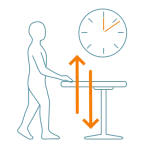
1. Transition Rhythm > Check your timing.
Alternate between sitting and standing every 30 to 60 minutes. Moving regularly prevents static muscle fatigue and keeps your energy levels consistent throughout the day.
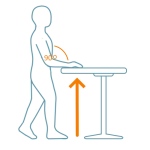
2. Desk Height > Check your alignment.
Ensure your desk height adapts smoothly to both positions. When standing, your elbows should rest comfortably at a 90 to 100-degree angle with your shoulders relaxed.
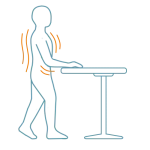
3. Muscle Tension > Check your body.
Avoid locking your knees or hunching your shoulders as fatigue sets in. Keep a soft micro-bend in your knees and maintain an upright, balanced spine while standing.
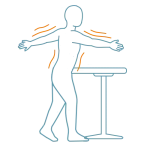
4. Movement Breaks > Check for stiffness.
Take a conscious moment every hour to step away, stretch your legs, and reset your posture to relieve physical tension and protect your focus.
Quick Adjustments to Check Your Posture Rhythms
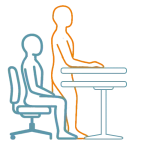
1. Set your transition rhythm.
Alternate between sitting and standing every 30 to 60 minutes. Building this rhythm prevents static muscle fatigue and keeps your energy levels consistent throughout the day.
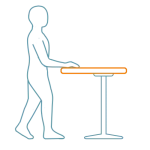
2. Calibrate standing height.
When standing, your elbows should rest comfortably at a 90 to 100-degree angle. Ensure your desk is at the correct height to keep your shoulders relaxed and prevent hunching.
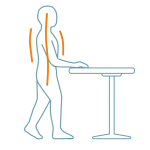
3. Maintain neutral alignment.
Keep an upright, balanced spine with your shoulders back and down. Avoid locking your knees or tucking your pelvis while standing; maintain a soft, micro-bent stance.
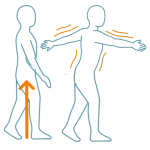
4. Stand up to reset.
Take a conscious moment every hour to step away completely. A quick walk or stretch resets your joints and restores your focus more effectively than simply changing desk height.
Why This Matters
Statically holding your body in fixed positions or ignoring regular movement transitions places continuous, cumulative strain on your spine, joints, and supporting muscles. This leads to fatigue, stiffness, and a drop in daily energy. Maintaining a dynamic routine of posture shifts and regular movement breaks preserves your physical comfort, structural alignment, and long-term workplace stamina.
FAQ’s
It is recommended to transition between sitting and standing every 30 to 60 minutes. Alternating your posture regularly prevents static muscle fatigue, keeps your energy levels consistent, and avoids overloading any single muscle group.
When standing at your desk, your elbows should rest comfortably at a 90 to 100-degree angle. This ensures your shoulders remain relaxed and prevents you from hunching or straining your upper back.
Taking conscious micro-breaks every hour to step away, walk briefly, or stretch resets your joints and restores mental focus more effectively than simply adjusting your desk height.
Early warning signs include lower back stiffness, shoulder tension, neck fatigue, and a general drop in afternoon focus. Introducing dynamic movement transitions and checking your alignment helps catch and prevent these issues early.
Related Quick Tips
Quick Tips: Is Your Keyboard in the Right Position?